Time to Cross the Bridge

There were some inspiring acceptance speeches given at last night’s Oscars. From Patricia Arquette to Graham Moore, several recipients chose to speak their hearts, and it made the very long telecast that much more compelling.
 

inspiration


John Legend and Common’s performance of “Glory” was absolutely beautiful, and when they accepted the Oscar for Best Original Song, their words spoke to my heart. Common recalled performing the song at the Edmund Pettus Bridge in Selma, Alabama and how the bridge was “built on hope, welded with compassion, and elevated with love for all human beings.” Powerful and eloquent.

In 2015, we still need to cross that bridge. We have not yet made it to the Promised Land.

Back in 2013, I wrote a post titled “My Problem with Tolerance.” Though it is neither powerful nor eloquent, I am sharing it again here because it expresses my thoughts on one of the things I think we need to acknowledge if we are ever going to completely cross that bridge.

Don’t you think it’s time?


Originally posted on October 14, 2013.


My Problem with Tolerance


salad 3

Please note: this post may have an idea or two that you are not comfortable with, along with an extreme overuse of quotation marks and italics. There may also be some rambling. Proceed at your own risk.

I have an issue with the notion of “tolerance” as a way of coexistence.

When I hear people who are “in favor of tolerance,” I wince a bit. Why?

Here’s my issue: tolerance, by way of definition is a capacity to endure pain or hardship…sympathy or indulgence for differing beliefs…the act of allowing something…the allowable deviation from a standard.

Tolerance implies “permission” from an “authority” or “sympathy” for the different. I find it condescending.

I don’t want tolerance. I need acceptance.

Now, for me, there are times the word tolerance is spot on. For instance, I will use it with my son (“I will not tolerate your using the dog like a wheelbarrow”) because I am an authority figure (most days) for him, trying to set healthy boundaries. Other instances where this word makes perfect sense is in not tolerating abuse of others or the breaking of a law. As the definition goes, these things deviate beyond the standard. I have no issues with not tolerating pedophiles or rapists or anyone else who hurts another.

But it’s not up to me to tolerate another person’s race, religion, age, national origin, marital status, sexual orientation…or any other kind of law-abiding “type.”

It is not mine to offer “sympathy” for what might be different from me. Who am I to tolerate another person’s nationality? And on the flip, who is tolerating mine? Should I breathe a sigh of relief that I don’t hear so many mafia jokes now that The Sopranos is off the air?

To me, it all boils down to Differentism. It’s the one ism that encompasses all the other discriminating isms—because all of them are about being different in one way or another. And what is at the core of Differentism? Fear. Fearing that which is different from you. (Or that you at least think is different from you.)

To me, it is fear that causes so much pain.

Cultures that oppress women and deny girls an education…what on God’s green earth would be a legitimate reason for wanting to keep someone uneducated? Why wouldn’t we be cheering for the support of raising up more women like the young Malala Yousafzai? The more we educate everyone, the better our overall world will be. Why would anyone want to keep another in the dark if not for fear?

Of course, the answer might also be “hatred,” but that is rooted in fear, too, isn’t it?

We fear what we don’t know or understand.

The one thing I see that helps overcome this is…learning. Talking. Connecting. Striving to understand. Realizing we are more alike than different. And while that which is different may not be our cup of tea, it’s not ours to throw stones at, either. Or to “put up with.”

As an American, I am blessed to be a part of a country that reflects the faces of many nations. Unless you are a Native American, your ancestry will cross at least one border. It’s a huge part of what makes us who we are. Our country is not a pedigree but a mutt (and if you’re a dog fan, you know that pedigrees can be sickly and quirky due to keeping the blood so “pure,” but mutts are strong and full of personality). Why are there those of us who see it as “us vs them”? We are both!

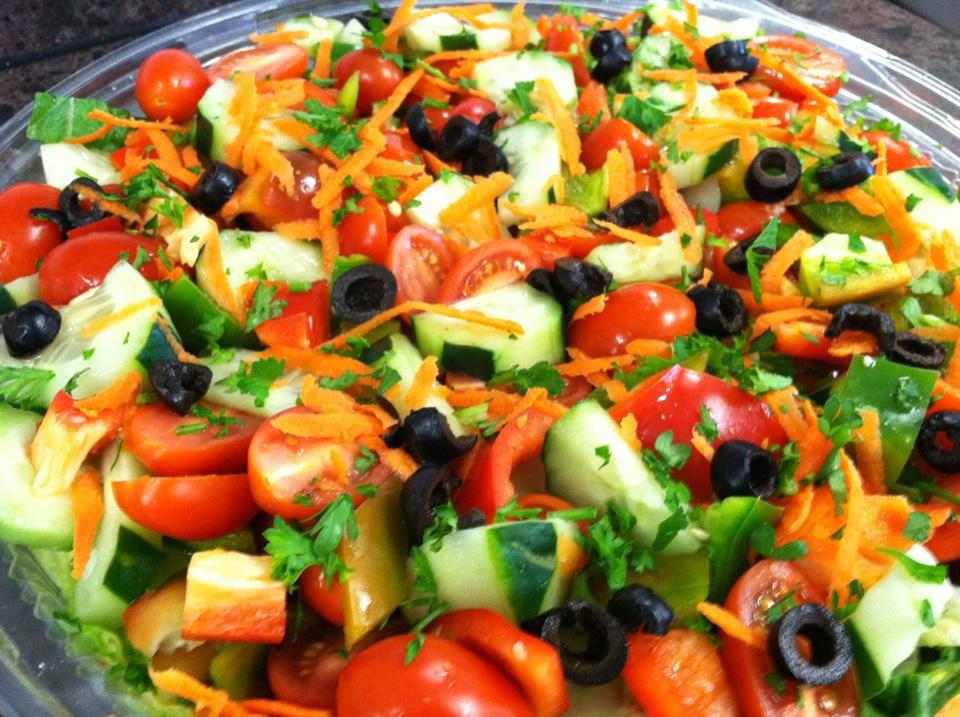
But I don’t want America to be a melting pot. You know why? Because it takes and makes everything into one thing—it boils it all down and blends it all up. I want America to be a delicious salad with all sorts of ingredients tossed together that enhance the whole dish. Together better than apart. But not all homogenized–still with the qualities that make us who we are. That shouldn’t just be the American Way, but the way of the world…at least according to me.

We don’t need to tolerate one another. We need to understand, love, support, help, and even celebrate one another.

If you’re still reading this rambling manifesto, go pour yourself a glass of wine (or beer. or vodka. or one of each. or more). You deserve it. But I hope that my tossed salad offers some food for thought about the nuances of the words we use when we talk about one another.

I don’t want you to tolerate me. I hope that you can accept me as I am: a goofy, flawed, work-in-progess.

And I’ll do the same for you.


Please note that there may be advertisements below via WordPress.com.
The presence of these ads does not constitute endorsement of the information, services, or products found in them.

Prejudice Taught

I love looking at babies’ pint-sized feet. Not only are they adorable, but when I have one of those teensies in my hands, I often find myself thinking about how those little soles (and souls) have yet to walk a step…but they will walk countless miles over the course of a lifetime. Their tiny feet are blank slates to the world that they will traverse.


toes


A new life is a blank slate in other ways, too. A baby does not pop out with a favorite football team or political party. Those opinions usually get formed in the environment in which the child is raised. So, for instance, we chose to educate our child that the Chicago White Sox is the baseball team to embrace because we are wise. Others will choose to indoctrinate their kid that it is the Chicago Cubs. (Of course, after last season, neither team has bragging rights, but let me just say one thing: 2005. Enough said.)

My point is that, while little ones certainly have their own minds and personal preferences in life (peas or carrots?), the attitudes that they develop about societal issues can be greatly influenced by what they see and hear around them.

Yes, I am aware that this is a point pretty much understood by everyone, and I’m not saying anything new. But then I wonder…if we do know this, why aren’t we more careful about the messages we send?

I remember learning that the word prejudice meant to pre-judge. It made it easy to remember back in fourth grade, and it still works pretty well. I believe that we all do this to different extents in one way or another. I know I do. If I get into the 15 items or less line at the grocery store and the person ahead of me has well beyond that number, I will immediately judge that some other inconsideration is on the horizon. And darn it if she isn’t going to pay by check…and of course only after the cashier has told her the total does she decide to actually look for the checkbook, and then she can’t find it in her purse, and then there is no pen, and then she can’t find her ID…well, my prejudice seems “justified.” I knew it, my little voice might say.

While I am a flawed pre-judger of some things, I do have a difficult time when people around me speak in a negative, discriminating way—and I may just throw the speaker of those words for a little bit of a loop by claiming to be whatever the person just spoke against. Like, for instance, back in the grocery store (such a happening place!) when the cashier made a derogatory comment about Muslims to the person ahead of me (not the check writer, this is a different day—stick with me) and, even though I am not Muslim, I said, “Uh…I’m Muslim…” only to see her jaw drop and have her stammer out an “oh, I’m sorry,” to which I suggested to her that she might want to think before she speaks. It’s a longshot, I know, but my hope is that the experience may stick with her long enough for her to reflect on her actions.

Plus, I kind of get a kick out of messing with people when they say something like that.

Which leads me to the story that is at the heart of this post and has stuck with me for a long time. Years ago I worked as a waitress to put myself through grad school, and every once in a while, the restaurant owner would bring his nine-year-old daughter to work and let her hang out with us. On one of these days, I was with the girl in the waitress station, and she told an anti-Semitic joke. I immediately said, “I don’t find that funny. I’m Jewish.” This flustered her only momentarily—then she responded, “No, you’re not.” And I again told her that I was…and she again told me that I was not. When I repeated that I WAS and asked her why she was arguing with me, she said “I know you’re not…because my dad would never hire a Jew.”

Now it was my turn to be flustered. And sad. Very, very sad.

That is prejudice taught.

And I don’t understand it.

I guess I could understand this kind of aversion if, say, you live in Nigeria and you were making sure your daughter understood how dangerous Boko Haram is or perhaps Mexico where you hate what the drug cartels have done to your city. Sometimes there is a legitimate reason to loath a wide swatch of people. Sometimes.

But because of your skin color? Your gender? Your faith? Your sexual orientation?

That’s not for me—and I will do my damndest to make sure it’s not for my kid, either. I’m a far cry from perfect, but it makes me smile when my son asks a question about some sort of discrimination he is seeing and as I answer him and tell him why it’s not right, he cuts in with, “I know, I know, Mom: God loves all people.” Message received.

We are indeed supposed to love one another…not some another…which then means I’m supposed to love the people who teach their kids to hate certain kinds of people. There’s where I really need some extra grace. Big time.

And I’m working on it, but like I say…I am far from perfect.


All photos are my own.
Please note that there may be advertisements below via WordPress.com.
The presence of these ads does not constitute endorsement of the information, services, or products found in them.

My Problem with Tolerance

salad 3Please note: this post may have an idea or two that you are not comfortable with, along with an extreme overuse of quotation marks and italics. There may also be some rambling. Proceed at your own risk.

I have an issue with the notion of “tolerance” as a way of coexistence.

When I hear people who are “in favor of tolerance,” I wince a bit. Why?

Here’s my issue: tolerance, by way of definition is a capacity to endure pain or hardship…sympathy or indulgence for differing beliefs…the act of allowing something…the allowable deviation from a standard.

Tolerance implies “permission” from an “authority” or “sympathy” for the different. I find it condescending.

I don’t want tolerance. I need acceptance.

Now, for me, there are times the word tolerance is spot on. For instance, I will use it with my son (“I will not tolerate your using the dog like a wheelbarrow”) because I am an authority figure (most days) for him, trying to set healthy boundaries. Other instances where this word makes perfect sense is in not tolerating abuse of others or the breaking of a law. As the definition goes, these things deviate beyond the standard. I have no issues with not tolerating pedophiles or rapists or anyone else who hurts another.

But it’s not up to me to tolerate another person’s race, religion, age, national origin, marital status, sexual orientation…or any other kind of law-abiding “type.”

It is not mine to offer “sympathy” for what might be different from me. Who am I to tolerate another person’s nationality? And on the flip, who is tolerating mine? Should I breathe a sigh of relief that I don’t hear so many mafia jokes now that The Sopranos is off the air?

To me, it all boils down to Differentism. It’s the one ism that encompasses all the other discriminating isms—because all of them are about being different in one way or another. And what is at the core of Differentism? Fear. Fearing that which is different from you. (Or that you at least think is different from you.)

To me, it is fear that causes so much pain.

Cultures that oppress women and deny girls an education…what on God’s green earth would be a legitimate reason for wanting to keep someone uneducated? Why wouldn’t we be cheering for the support of raising up more women like the young Malala Yousafzai? The more we educate everyone, the better our overall world will be. Why would anyone want to keep another in the dark if not for fear?

Of course, the answer might also be “hatred,” but that is rooted in fear, too, isn’t it?

We fear what we don’t know or understand.

The one thing I see that helps overcome this is…learning. Talking. Connecting. Striving to understand. Realizing we are more alike than different. And while that which is different may not be our cup of tea, it’s not ours to throw stones at, either. Or to “put up with.”

As an American, I am blessed to be a part of a country that reflects the faces of many nations. Unless you are a Native American, your ancestry will cross at least one border. It’s a huge part of what makes us who we are. Our country is not a pedigree but a mutt (and if you’re a dog fan, you know that pedigrees can be sickly and quirky due to keeping the blood so “pure,” but mutts are strong and full of personality). Why are there those of us who see it as “us vs them”? We are both!

But I don’t want America to be a melting pot. You know why? Because it takes and makes everything into one thing—it boils it all down and blends it all up. I want America to be a delicious salad with all sorts of ingredients tossed together that enhance the whole dish. Together better than apart. But not all homogenized–still with the qualities that make us who we are. That shouldn’t just be the American Way, but the way of the world…at least according to me.

We don’t need to tolerate one another. We need to understand, love, support, help, and even celebrate one another.

If you’re still reading this rambling manifesto, go pour yourself a glass of wine (or beer. or vodka. or one of each. or more). You deserve it. But I hope that my tossed salad offers some food for thought about the nuances of the words we use when we talk about one another.

I don’t want you to tolerate me. I hope that you can accept me as I am: a goofy, flawed, work-in-progess.

And I’ll do the same for you.