
Sometimes an offhanded remark sticks like super glue. Though the person who said it probably didn’t give it much thought, the person it’s being said to does. Continue reading “Fearfully and Wonderfully Made”
Fearfully and Wonderfully Made

Sometimes an offhanded remark sticks like super glue. Though the person who said it probably didn’t give it much thought, the person it’s being said to does. Continue reading “Fearfully and Wonderfully Made”
Until yesterday, I didn’t know what the official definition of a blizzard was, but it is a storm that not only includes snow but “winds in excess of 35 mph…for at least three hours.” I learned that because our local weatherperson was explaining it…because we were in the throes of a blizzard.

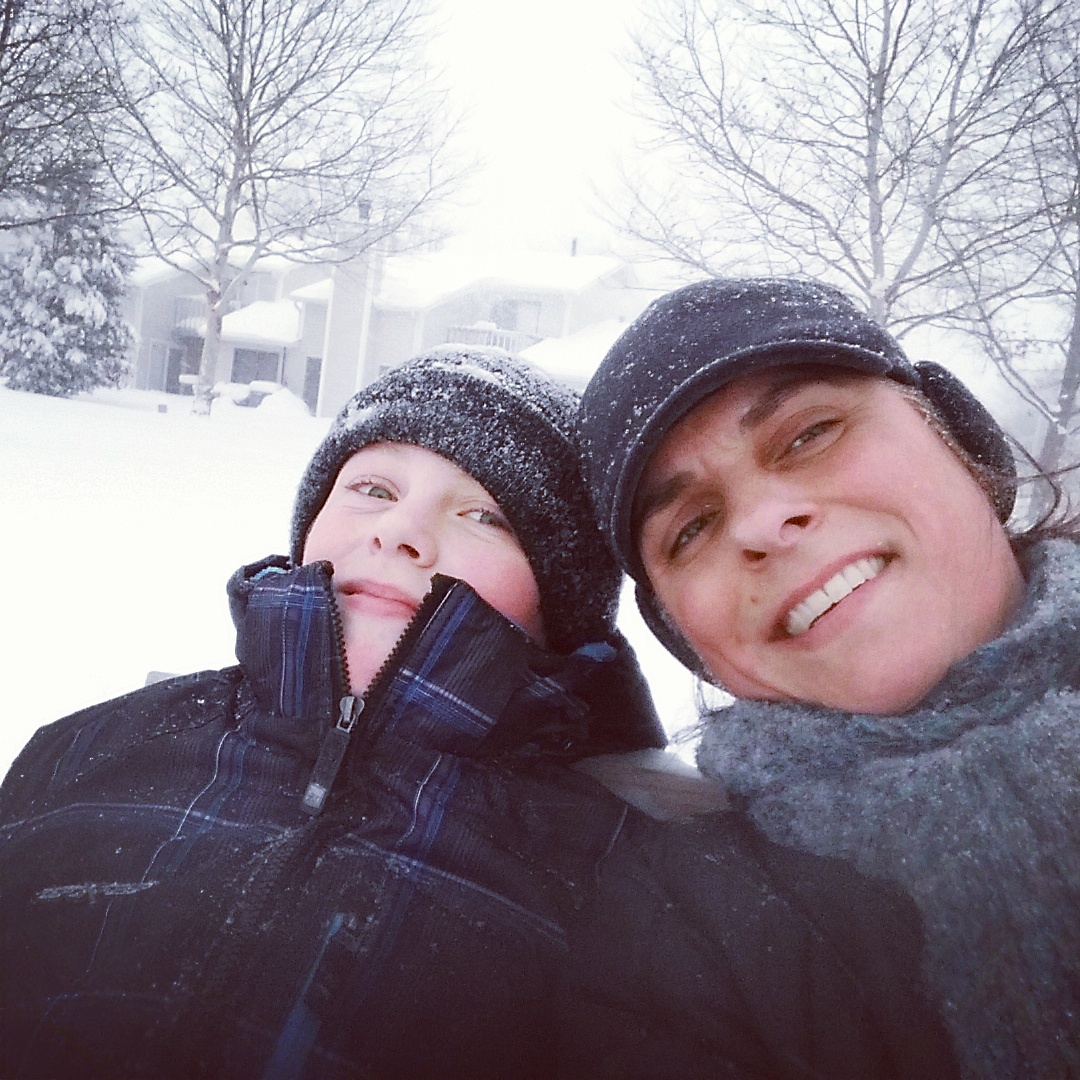
Sounds like perfect sledding weather, no? I figured it was. With my son’s friends gone for the day and my husband busy dealing with a deadline, I thought a little one-on-one snow fun with my kid was a great idea. So my son and I bundled up and headed out for the sled hill that is a little over a half a mile from our house.
Um…they’re not kidding about the wind. It was bitter, and we couldn’t see all that much.
It had snowed nearly a foot by then, so we were trudging through snow that was close to our knees.

At about the halfway point we paused to catch our breath and looked at each other. The hill was off in the gray distance, and we could hardly hold our gaze toward it with the wind slapping at our eyes. Before we set out, we had agreed that if either of us wanted to turn back, that would be just fine. No pressure. But now I looked at my son and said, “I don’t know about you, but I didn’t come this far not to go down that hill at least once.”
So much for no pressure. Luckily, my kid was of the same mind. “Oh, no way, Mom…we’re doing it.”
And on we trudged.
I led the way, head tucked down but with an eye toward our next steps. After a quiet stretch of plodding along, I stopped and said to my son, “Man, walking through that deep of snow was tough.”
“Nah, it wasn’t too bad. I was walking in your footsteps, so I was okay.”

And in that moment—even with the wind whipping and the snow blowing—I couldn’t help but be struck by his words.
It was a perfect crystallization of what an important part of parenting is to me. Leading the way, and in doing so, helping our kids to follow without the same amount of struggle.

Mind you, I didn’t say a crystallization of all of parenting—just a part. Because I don’t believe the role of a parent is simply to make things easier for our kids. Between our schedules revolving around them, and their being awarded trophies for simply breathing—this generation is feeling pretty good about their place in the world.
No—sometimes struggling in the exact way that we do is also a powerful and necessary lesson.
Earlier in the day, my son experienced that very thing. My husband and I are so used to being the “doers” that we often forget to have our son share in the doing, as well. With the unrelenting snow, there was plenty to shovel—and our kid was out there learning that you gotta do what you gotta do…and then do it all over again. He did a great job, and not only did he better understand the hard work involved in such a task, but he had a little pride surveying his work.

For me, the blizzard brought great examples of two key aspects of what any kind of nurturing relationship should be. Sometimes you pave the way to help the person along, and sometimes all you need to do is give them the tools to take care of it on their own.
…And we did make it to the hill.

And we did go down it a bunch of times.

And I was wise enough to avoid using my son’s snowboard.

And we were exhausted by the time we got home.

…And I would do it all over again.
This past week began with a baptism and celebration of a friend’s baby and ended with a funeral for another friend. From one end of the spectrum to another…and it reminded me of both the beauty and pain of life.
When my son was a baby, a friend gave me the children’s book Let Me Hold You Longer by Karen Kingsbury. It’s a beautifully sweet picture book that reminds parents to not only enjoy the “firsts” of their little ones, but also the “lasts,” too. I could never (still can’t) get through it without tears. “Mom, why are you crying? Is something wrong?” my little man would ask as he looked up at me with big eyes, wondering why the tears were welling as I read to him. Through my sniffles, I would reassure him that all was well…but I could already feel the time slipping away.
And that is indeed life. We have certain things in our lives that happen to a rhythm, but then one day the rhythm changes, and what was routine is no longer. Aware of this, I really do strive to be mindful of “lasts” with my son. Like when he grew to the age where carrying him was getting harder and harder, it would flash across my mind, “Could this be the last time?” I didn’t want to take anything for granted; I wanted to tuck the memory away in my heart for safekeeping.
But even with that mindfulness, there is no way to know the lasts for most things. I didn’t know the last time my son would snuggle on my lap and really fit my lap. Or the last time he would say “brefkist” instead of “breakfast.” And I doubt I’ll know the last time he willingly holds my hand as a boy—though there will most likely come the day he will hold my hand as a man in order to make sure his old mom doesn’t fall.
Even though I know the lasts are coming, I simply don’t know when in order to be able to savor them in the moment.
Sometimes I recognize the lasts in hindsight. Having lost my dad at a relatively young age, I still sometimes reflect on the “lasts” of my time with him. The “lasts” I didn’t know were lasts until he was gone. Especially while looking at old photos, I find myself noting, “That was the last vacation we ever took,” or “this was the last birthday he celebrated…”
I wonder what would have changed if I knew it was a “last” for us? Certainly Kingsbury’s book title reflects the answer. Knowing would be so very bittersweet.
My heart hurts for my friend whose husband’s funeral I just attended. She had no idea of the lasts that she was experiencing. There was a familiar rhythm to life, and then, in an instant…he was gone. The “lasts” had been recorded without warning.
And now, along with the “lasts” she may eventually come to know, she will embark on a whole new journey of “firsts.” While many of the “firsts” are painful—like first holidays celebrated or returning to a favorite place filled with memories—the day will come when some firsts will offer the hope of better days, and new life rhythms will be created. The “lasts” are final, but the “firsts” can just keep coming. Thank God for that.
In the end, the firsts and lasts of life are only part of the story. Important parts—but not the only parts. They help us mark times of growth or change, but if they escape us, life goes on. The rest is the InBetween.
And so, for me, I must continually strive to be present for the InBetween, aware of the fragility of it all but savoring the beauty of it as best I can…Listening for the rhythms of life and dancing to the beat of each day’s song.
In last week’s post, I hit on a few key points from Brigid Schulte’s New York Times bestseller, Overwhelmed—Work, Love, and Play When No One Has the Time that touched on why so many of us feel overwhelmed. This week, I’m focusing on some key strategies that will help “crack the culture” of why we feel this way.
Before I go any further, though, I want to take a moment to clarify something. This book is about helping both women and men make better choices for a more fulfilling life. There is no bias against either gender—just an examination of what is and why, and then ways to help everyone make better use of their time. Translation: Men, this book is worth reading for you, too.
I want to offer some takeaways for you to chew on right now, but I can’t stress enough how worthwhile it is to read the entire book. And as I said in last week’s post, this is not a paid endorsement. I just want to share some of what I found so valuable and maybe motivate you to do your own thinking and searching…and changing.
So…where to begin? As the title suggests, the book is broken down into the three areas of work, love, and play, and Schulte examines and offers help in each.
Apparently I can’t be that structured today, so…in no particular order…the takeaways…
Find your pulse—I keep thinking that if only I had large blocks of uninterrupted time to focus, I would be much more productive…but we aren’t actually built that way. There is a rhythm—a pulse—to our lives. We inhale…and exhale. And we need to spend time working…and recovering. It’s how we will do our best work. Schulte shares research that shows that working in 90-minute stretches and then getting up and shifting gears entirely for a short period of time will greatly increase productivity. Find the pulse that works for you.
Choose your priorities—figure out what’s truly important to you and then live your life accordingly. Realign your time to focus on those choices. If you were to pick only a few things to focus on, what would they be? For instance, if spending time with your family was one of them, does your time focus reflect that?

Push yourself to play more—active play is actually a necessity for your brain. By giving yourself leisure time—time to explore, laugh, try something new—you are allowing your brain to reenergize and function better. Both historically and currently, women need more help than men in this area. We all need leisure time—and we don’t have to earn it first. Do not feel guilty about making time to have fun. If we can knock that stigma off its ridiculous high horse, we will lead healthier lives.

Denmark isn’t rotten after all—Schulte spent some time there learning what the Danish culture can offer those of us who are struggling with overwhelm. Let’s just say it is indeed a world away from American culture. The government there offers excellent formal child care, awesome paid parental leave, six weeks paid vacation…you get the idea. In Denmark, every day is meant to be lived well. You don’t live to work, you work to live. So…what if you don’t live in Denmark?
I concluded that while I don’t have the governmental realities of Denmark, I could still strive for my own private Denmark. What does that mean? As Schulte illustrates, gender roles there are very egalitarian. Women and men share responsibility in work, care of the home, and the raising of children. Work is necessary but not everything, and life shouldn’t be consumed with it. I know I am blessed that my husband already sees our marriage as a team, so our goal is to make it be even more that way. When that happens, both partners win. There is also the Danish idea of hygge, which is a lovely approach to life—and something that you can create wherever you live. (Learn more about hygge here.)
On parenting—Yes, this is the generation of the “helicopter parent” as well as the over-achieving parent. We are not doing our kids any favors by giving them so much or doing so much for them. I just love this piece of wisdom that Schulte shares from Kathy Masarie: “Love your kids. Keep them safe. Accept them as they are. Then get out of their way.” Parenting in a nutshell.
On mothers—Mothers need to stop making it so hard for themselves and each other. Stop the cult of “intensive mothering” and stop judging women—including yourself. Support each other rather than compete with one another.
On fathers—Fathers need to be connected from the very beginning to climb out of this culture of overwhelm. Schulte offers some wonderful insight about how important it is for dads to bond with their newborns—creating a foundation for lifelong engagement—and how too often gender roles get solidified when dads can do just as much as moms—and need to. One of the keys for this to happen is that new moms need to give new dads a chance to engage fully—not scoop the baby as soon as it fusses in dad’s arms.
And, finally…

Be still—pause. In the midst of the racing, remember to stop. Breathe. Remember the beauty of the small moments. Remember that life is short and this is all we have.

I hope these ideas I’ve shared from Schulte’s book get you thinking about some changes you can make. I know not all of us are married or have kids, and a lot of the content seems to focus on those “traditional” roles, but no matter where you are in life, you can strive to stop the merry-go-round of overwhelm that so many of us are riding and learn to live a more fulfilled life.
Of course, that having been said, as I write this I am mired in a day of overwhelm. But I am making progress. Every revolution starts with a first step, right?
We have a cultural epidemic on our hands. Past the auto-response “I’m fine,” ask the average person today how he or she feels about daily life, and see how many answer that life is coming at them at just the right speed. I doubt you’ll find one—especially if you are asking a woman. Most of us would probably have the word “overwhelmed” somewhere in our answer.

How did life spiral out of control on us?
I read a book over the summer that I feel compelled to write about. This is not a paid endorsement or formal book review. This is just me wanting to share some thoughts on what I found to be a powerful and timely book. It’s not my typical type of post, but I ask you to indulge me—I think this will resonate with you and be worth your time.
Bridgid Schulte’s Overwhelmed—Work, Love, and Play When No One Has the Time was one of those reads that offered me new insights while at the same time found me shouting, “Amen, Sister!” on several occasions.
Schulte is a reporter for the Washington Post, and when she recognized her life was leaving her breathless and constantly stressed, she did what any good reporter does—she researched the heck out of it, and then shared her findings.
And just what are some of those findings? Well, the book is a meaty read, and there is so much more to it than I can summarize, but here are some key points:
How’s that for a little food for thought? And I’m only touching on a few central points…there is so much more worth delving into. But even with these few facts provided, you can see how it all adds up to overwhelm.
So…is there anything we can do about it?
In next week’s post, I will take a look at some of Schulte’s findings on how we can improve our situation. Yep, it’s my first two-part post…try to contain your excitement…
…and remember to tune in next week for some ideas on how to change this current culture of overwhelm and perhaps stop the madness (or at least put a healthy dent in it.)
 In the summer of ’78, I betrayed myself. I sold my soul in an effort to fit in.
It was a scar that was forgotten until recently when an old friend posted a pic on Facebook for “ThrowBack Thursday.”
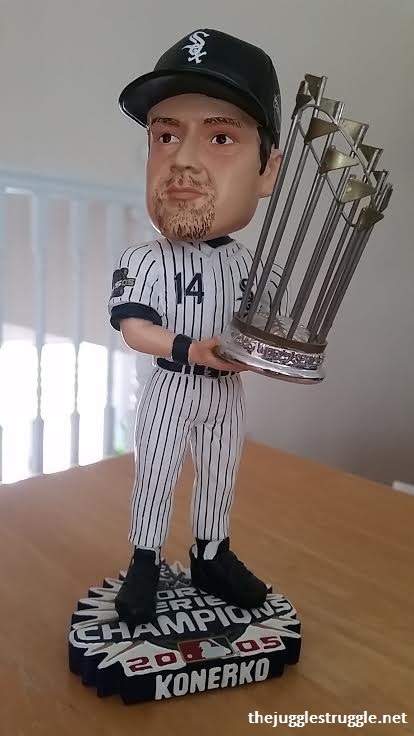
The distinction between being a Chicago White Sox or a Cubs fan is a strong one in my world. Those who say they are fans of both really aren’t baseball fans, in my opinion.
“Cubs or Sox?” was the second question I asked my future husband on our first date. Colors run deep (and good guys wear black). And while the current state of my life and baseball make it harder for me to really follow my team with any depth—it’s still a part of my core.
I grew up a Sox fan in a suburb of Chicago where that meant I was in a minority. I didn’t care—I wore (and wear) the distinction proudly. But in the summer of ’78, I pretended to be a Cubs fan in order to fit in better with my extended family.

I hid my Sox gear and started to watch Cubs games. I had a photo of Bill Buckner on my wall. I even got my hands on a Cubs shirt and wore it–which is what I was wearing in the Facebook photo.
I did all of this because my cousins were Cubs fans, and as we spent more time than usual with them that summer, I desperately longed to fit in.
We are social creatures. Whether introvert or extrovert, the need to connect is strong. For me, it was strong enough to betray what I knew was my truth in order to be accepted as “one of us” by others. As someone who values loyalty above so much else, it hurts to admit.
The betrayal lasted a season before I returned to my senses, and as the years went by, I buried the memory of my weakness. But the Facebook post brought back those memories and opened the door to my infidelity.
Let’s just say I’ve heard about it from a few people.
As a parent, I’ve had more than one conversation with my son (who is coincidentally the same age that I was when this story took place) about the difference between fitting in and belonging. I’ve shared with him how fitting in means altering yourself to be accepted, while belonging means being accepted for who you already are. I’ve shared how I believe this is a struggle throughout most people’s lives in one way or another, and the ultimate goal is to be yourself and then find where you truly belong, while accepting and loving others for their truths, too. (Unless they’re Cubs fans. Just kidding. Oh, shut up. Why don’t you go and think back fondly on your 1908 World Series win?)

So, yeah…our team loyalties are strong.

When my son saw the photo on Facebook he was slack jawed and confused. “Mom!?! What is that?!”
As you can see from the photo below, he has been a Sox fan from the start.

And so I had to cop to it and tell him my truth of the summer of ‘78. And it was a funny but teachable moment that reinforced the very point about desiring to belong rather than fit in, and how peer pressure to conform can lead you to compromising your values.
As I wrote in one of my Facebook comments on the photo, I just talked to my son about this—and how peer pressure can cause you to make HORRIBLE choices!!! (Choosing to masquerade as a Cubs fan is just slightly better than choosing crack cocaine!)
Yes, it is a topic that is non-threatening and (somewhat!) light-hearted, but he got the point that altering yourself from what you know is your truth in order to be accepted by others can lead you to choices that can run the gamut from embarrassment to shame and regret—and sometimes even worse.
While I am not about to fool myself into thinking that this is a “one and done” lesson where he will forever make the right choices, I do think it was a memorable example to help drive the message a little deeper. Maybe my season of betrayal had some purpose after all.
We all long to belong—to find that place where we are loved simply for who we are. Where our passions and quirks are accepted, and we are embraced—flaws and all. Where our metaphorical hair can be let down, and not only is it okay, but we have support to help us comb through the tangles.
At the very least, I believe my son knows that one of those places for him is right here with his family where, no matter what, he is loved thoroughly and unconditionally—even if one day he does come home…wearing Cubby blue.
 thejugglestruggle.net