Prejudice Taught

I love looking at babies’ pint-sized feet. Not only are they adorable, but when I have one of those teensies in my hands, I often find myself thinking about how those little soles (and souls) have yet to walk a step…but they will walk countless miles over the course of a lifetime. Their tiny feet are blank slates to the world that they will traverse.


toes


A new life is a blank slate in other ways, too. A baby does not pop out with a favorite football team or political party. Those opinions usually get formed in the environment in which the child is raised. So, for instance, we chose to educate our child that the Chicago White Sox is the baseball team to embrace because we are wise. Others will choose to indoctrinate their kid that it is the Chicago Cubs. (Of course, after last season, neither team has bragging rights, but let me just say one thing: 2005. Enough said.)

My point is that, while little ones certainly have their own minds and personal preferences in life (peas or carrots?), the attitudes that they develop about societal issues can be greatly influenced by what they see and hear around them.

Yes, I am aware that this is a point pretty much understood by everyone, and I’m not saying anything new. But then I wonder…if we do know this, why aren’t we more careful about the messages we send?

I remember learning that the word prejudice meant to pre-judge. It made it easy to remember back in fourth grade, and it still works pretty well. I believe that we all do this to different extents in one way or another. I know I do. If I get into the 15 items or less line at the grocery store and the person ahead of me has well beyond that number, I will immediately judge that some other inconsideration is on the horizon. And darn it if she isn’t going to pay by check…and of course only after the cashier has told her the total does she decide to actually look for the checkbook, and then she can’t find it in her purse, and then there is no pen, and then she can’t find her ID…well, my prejudice seems “justified.” I knew it, my little voice might say.

While I am a flawed pre-judger of some things, I do have a difficult time when people around me speak in a negative, discriminating way—and I may just throw the speaker of those words for a little bit of a loop by claiming to be whatever the person just spoke against. Like, for instance, back in the grocery store (such a happening place!) when the cashier made a derogatory comment about Muslims to the person ahead of me (not the check writer, this is a different day—stick with me) and, even though I am not Muslim, I said, “Uh…I’m Muslim…” only to see her jaw drop and have her stammer out an “oh, I’m sorry,” to which I suggested to her that she might want to think before she speaks. It’s a longshot, I know, but my hope is that the experience may stick with her long enough for her to reflect on her actions.

Plus, I kind of get a kick out of messing with people when they say something like that.

Which leads me to the story that is at the heart of this post and has stuck with me for a long time. Years ago I worked as a waitress to put myself through grad school, and every once in a while, the restaurant owner would bring his nine-year-old daughter to work and let her hang out with us. On one of these days, I was with the girl in the waitress station, and she told an anti-Semitic joke. I immediately said, “I don’t find that funny. I’m Jewish.” This flustered her only momentarily—then she responded, “No, you’re not.” And I again told her that I was…and she again told me that I was not. When I repeated that I WAS and asked her why she was arguing with me, she said “I know you’re not…because my dad would never hire a Jew.”

Now it was my turn to be flustered. And sad. Very, very sad.

That is prejudice taught.

And I don’t understand it.

I guess I could understand this kind of aversion if, say, you live in Nigeria and you were making sure your daughter understood how dangerous Boko Haram is or perhaps Mexico where you hate what the drug cartels have done to your city. Sometimes there is a legitimate reason to loath a wide swatch of people. Sometimes.

But because of your skin color? Your gender? Your faith? Your sexual orientation?

That’s not for me—and I will do my damndest to make sure it’s not for my kid, either. I’m a far cry from perfect, but it makes me smile when my son asks a question about some sort of discrimination he is seeing and as I answer him and tell him why it’s not right, he cuts in with, “I know, I know, Mom: God loves all people.” Message received.

We are indeed supposed to love one another…not some another…which then means I’m supposed to love the people who teach their kids to hate certain kinds of people. There’s where I really need some extra grace. Big time.

And I’m working on it, but like I say…I am far from perfect.

 

All photos are my own.
Please note that there may be advertisements below via WordPress.com.
The presence of these ads does not constitute endorsement of the information, services, or products found in them.

Reclaiming the Other F Word

“Oh, you’re one of those…” is a phrase I hear more often than I would ever expect to in this day and age. See, I’m a hyphenator. I chose to hyphenate my last name when I got married, and according to the kinds of responses I sometimes get, that makes me “difficult.”

That’s right—I wanted to keep my family name along with taking my husband’s last name. Pretty crazy, I know. But I never thought that that choice would carry with it a judgment for some people—and a negative one at that.

While women may have “come a long way, baby,” we still have a lot further to go. As I was thinking about this today, I decided to YouTube the old Virginia Slims commercial that made that phrase so popular. Ironically, the expression that came to symbolize women’s progress is merely trying to capitalize on making women want to smoke feminine cigarettes and be sexy while doing it. Progress indeed.

In my lifetime, I’ve learned that I better be careful in calling myself a feminist. That in doing so, it made me “anti-male” and bitchy. Though there may be a small contingent of women who call themselves feminists and claim that women are the superior gender, all I ever wanted was equality—as most feminists do. The only “anti” I am is anti-discrimination. If men were making less than women, having laws telling them what they can and can’t do with their bodies, being restricted from education in parts of the world, or dealing with the pervasiveness of sexual assault, I would be against that, too.

I am so happy to see the movement toward taking away the negative connotations of the word feminism and reclaiming it as the movement toward gender equality.

Emma Watson—the woman who brought the amazing Hermoine Granger to life—spoke so eloquently on this to the United Nations (that’s right, the U.N., baby!) As the U.N. Women Goodwill Ambassador, she is launching a campaign called HeForShe where the goal is to empower both women and men to be who they are and to be treated equally. Simply put, she’s awesome.

The video is over 12 minutes, but…if you’ve got the time, it’s definitely worth a listen.


Another campaign that strives to empower young women is Always’ Like a Girl campaign. If you haven’t seen the video, check it out:


It shows the subtle—or not so subtle—undercutting of gender that happens without thought…and how young girls and boys can get the message that “like a girl” means “less than.”

I experienced a real life demonstration of how this message gets absorbed by young women over the summer. Every year we go to a beautiful place in the Northwoods of Wisconsin where we see other vacationing families every year. Because I only get a glimpse of these folks annually, it is fun to see how the kids grow from year to year. But this past summer disturbed me a great deal. Girls who had only last year been happy to take to the softball field in a boys vs girls game and give it their best effort were now acting incapable and flighty. One girl let a ball roll right by her and said she didn’t want to break a nail…seriously. And, much to my dismay, that kind of behavior was consistent throughout the week.

What had happened in a year? Somehow they got the message that being strong and athletic was not feminine or desirable. It broke my heart because I knew that it had only been the previous summer that they were embracing their strength—and now they were not only downplaying it, but denying it.

When I see homecoming photos posted on Facebook of lovely groups of young women—all wearing pretty much the exact same barely mid-thigh dress, give or take the color—I realize how strong the pressure must be to meet society’s current expectations of the popular woman. Good luck trying to find a dress for that age that strays from the “standard”—and the question arises as to whether it is a case of supply and demand or demand and supply. What’s available in stores “teaches” us what we should look like.

In 2014, the fact that girls are getting the message that it is their fault if they get raped because they were drunk should be inconceivable—but it’s not. So strong is that attitude that the White House has launched a campaign to fight against it:


We’ve got to not only raise our girls to stand strong but raise our boys to embrace that strength and respect it.

Anything less isn’t right. It just isn’t.

People should be paid equally for the same work. People should have sovereignty over their bodies. People should have the opportunity to be educated. People shouldn’t have to worry about being sexually assaulted. People should be respected for who they are and what they do. People should be encouraged to reach their potential. People should be loved, accepted, and valued for who they are—not what they look like.

Replacing the word “women” with “people” makes it really hard to deny, doesn’t it?

That’s the true heart of feminism. That’s what we need to reclaim. That’s what both women and men—what humanity—should strive for. Anything less is just fear trying to keep others down. And we’re better than that, don’t you think?

Well, we should be.

Please note that there may be advertisements below via WordPress.com.
The presence of these ads does not constitute endorsement of the information, services, or products found in them.

Shut the Door and Teach

Do you ever feel like some days life is really just a big dodgeball game and you’re the only one left on your side of the court? Balls flying everywhere and all you can do is run around like Phoebe from Friends until the inevitable happens and you get pummeled from numerous angles?


dball4


Okay, maybe it’s not that intense, but too often outside forces can lead us to lose sight of our true purpose.

When I taught, my fellow teachers and I had to deal with an onslaught of issues from the administration. It was, quite frankly, often hard to swallow, as those who were telling us what we needed to do in the classroom had either never taught before, or had a year or two of teaching physical education under their belts before moving over to administration. I’m pretty sure a surgeon wouldn’t be thrilled with a first or second year resident telling her how to operate. But I digress.


With the swirl of outside forces clouding my vision, I used to tell myself this one thing to remember why I was there:

Shut the door and teach.

After all, that was my true purpose. I didn’t get into education for the politics of it all—I became a teacher because of my love of learning and wanting to share that with my students in the hopes that they, too, might also fall in love with it—or at least fall in like with it. Ever the realist, I am.


bookd


Just shut the door and teach—because that is why you are here. This is your purpose, your calling—and don’t let yourself get mired down in the morass of what is flung at you from those outside forces.

Along my life’s journey, I have had other callings, and still the same mantra holds true. While I’m no longer in the classroom, I still need to remind myself to shut the door and teach, in whatever adaptation that means.


door


No matter what my purpose is, I need to shut out the (often negative) distractions and zone in on what I can do to make a difference.

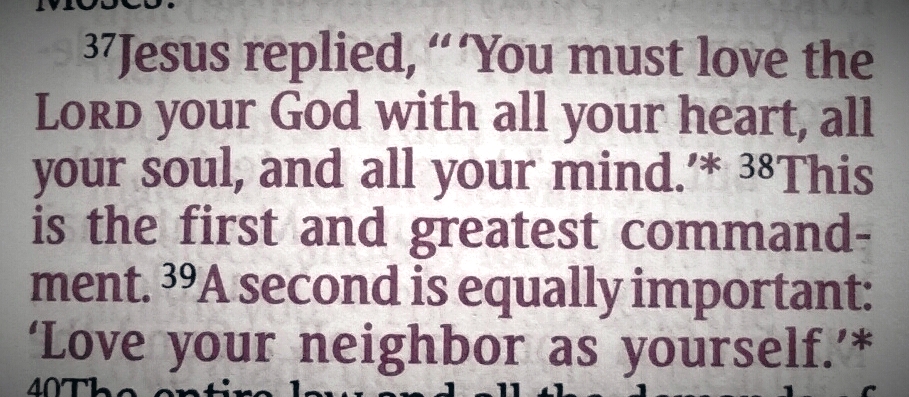
Even within our personal lives, we need to remember to shut the door and teach, so to speak. After all, we can really rip ourselves apart when we lose sight of our core purpose: to love one another.

Really…isn’t that just it? God calls us to love him and one another. Period.


verse


We are not called to feel poorly because our house isn’t just the way we want it or our kid doesn’t have all of the bells and whistles that seemingly everyone else does. We are not called to be caught up in the “stuff” of this world.

We are not called to be the answer to every unfolding drama that comes our way or every problem dropped in our laps. Sure, we are to do our best and take responsibility appropriately, but it needs to be in keeping with our purpose—not derailing us from it.

Just shut the door and teach…and love.

Of course, this doesn’t make the distractions and negatives disappear. We all know better than that. After all, the administration kept right on with their form of educational dodgeball. And bills won’t pay themselves. And crises still come our way. Life will still send us ducking and dodging, but we are hopefully more fulfilled because we keep our focus through it all. (Or at least on most days. Still the realist.)

So for all of us who from time to time feel pummeled by the world around us, I hope you are able to do your own version of shutting the door and teaching…of remembering your calling and keeping those that have a habit of putting obstacles in your way in their proper place.

Remember what you came for…and then do it.

It’s Time to Move Mountains

My thoughts here are a bit passionately swirled, so please bear with me.

When people talk when they don’t know what they’re talking about—and not just talk, but judge—I have a problem with that. A big problem. I’ve been feeling it pretty strongly this week with the death of Robin Williams.


Robin Williams (6451545105)
Photo by Eva Rinaldi, via Wikimedia Commons


I, along with so many others, was devastated to learn of Williams’ suicide. The one glimmer of hope I felt in his passing was that maybe it would shed better light on mental illness. After all, if a man seemingly so full of joy could take his own life…depression must be real, right? And, thankfully, I have heard some good conversations started because of it. But it’s also brought to light some stunningly insensitive opinions on the topic, as well—most notably (at least for me) the comments made by rocker Gene Simmons. Simmons has since tried to renege on his comments, but I find even those words exasperating.

That kind of stuff feels like a kick in the gut to me.

Back when I taught high school, I went to a student’s funeral who committed suicide. The semester had just started, so I didn’t really get to know her, but I really wish I had had the chance to…What I did see was that she was quiet, sweet, and thoughtful. And she totally mattered. The world lost out when she decided to leave it.

According to Mr. Simmons, though, she had some “dignity” when she killed herself. Granted, his comments are on the far end of the spectrum. While his words are easy for most of us to dismiss as outrageous, there are other responses that, while not so blatantly offensive, still show a lack of understanding when it comes to mental illness.

As I shared in Beautifully Broken, I cope with depression and anxiety. It runs in my family, and it has definitely left its mark. Though my struggles have not brought me to the brink, I understand how the thief that is depression can steal your hope and bring you to dark places that on a good day you could never imagine.

I don’t pretend to know much about depression, but at least I know I don’t know. And I do know that whatever other people are going through, my best response is to listen and care.

I know that mental illness is an illness…and not just people being electively “crazy.” I know that there are people who would never say “get over it” to someone who has cancer or heart disease, but don’t hold mental illness in the same category. Yet it is.

I’ve heard from the pulpit how if we just “turn toward God” we wouldn’t need prescription drugs. I’ve seen people forego seeking help because they have been told to pray harder. Read more scripture. And while I truly believe that all of those things are important, I know that that kind of attitude from members of the clergy does an injustice—and actual damage—to people who are suffering.

There is no shame in illnesses like Multiple Sclerosis or asthma—or any other type of illness—and there shouldn’t be in mental illness, either. Jesus healed all types of sickness with his loving touch. I missed the part in scripture where he dismisses anyone’s hurts or tells them to snap out of it.

Is it possible that some doctors wrongfully prescribe antidepressants to people? Why, yes—in fact I believe that myself because I know people who have had a two-minute chat with a doctor who was then ready to write a prescription. Is there more research to be done on the effectiveness of these kinds of medications? Absolutely. But that doesn’t negate the reality that for many people, these drugs are both a life-saver and giver.


meds


Meds work for some people and not for others. Psychotherapy works for some and not for others. Some people need both. For some, other treatments like electroshock therapy bring relief. Mental illness is not a one-trick pony.

And our response to it should not be to judge or to fix. Please don’t assume you know people’s brokenness—how they got broken, how they need to “fix” it, or what they are doing “wrong.”

As with all the rest of life, if we just tried to understand and care for one another…to have empathy for another’s experience…we could move mountains.

So let’s push to remove the stigma of mental illness. Let’s make it so that people who need help aren’t afraid of being seen as “less than” and instead feel safe to seek help as soon as they realize they need it. Let’s not judge the battles of those whose shoes we have not walked in. Let’s understand that this type of illness can hit anyone at any time, and the sooner we make these kinds of changes, the better for the whole world.

Let’s move mountains.


If you or someone you know is considering suicide, please seek help immediately. Don’t question whether or not you should seek help—just do it. The American Suicide Prevention Hotline can be found here, and here is a list of international suicide crisis hotlines

Part 2—Can We Crack the Culture of Overwhelm?

In last week’s post, I hit on a few key points from Brigid Schulte’s New York Times bestseller, Overwhelmed—Work, Love, and Play When No One Has the Time that touched on why so many of us feel overwhelmed. This week, I’m focusing on some key strategies that will help “crack the culture” of why we feel this way.

Before I go any further, though, I want to take a moment to clarify something. This book is about helping both women and men make better choices for a more fulfilling life. There is no bias against either gender—just an examination of what is and why, and then ways to help everyone make better use of their time. Translation: Men, this book is worth reading for you, too.

I want to offer some takeaways for you to chew on right now, but I can’t stress enough how worthwhile it is to read the entire book. And as I said in last week’s post, this is not a paid endorsement. I just want to share some of what I found so valuable and maybe motivate you to do your own thinking and searching…and changing.

So…where to begin? As the title suggests, the book is broken down into the three areas of work, love, and play, and Schulte examines and offers help in each.

Apparently I can’t be that structured today, so…in no particular order…the takeaways…

Find your pulse—I keep thinking that if only I had large blocks of uninterrupted time to focus, I would be much more productive…but we aren’t actually built that way. There is a rhythm—a pulse—to our lives. We inhale…and exhale. And we need to spend time working…and recovering. It’s how we will do our best work. Schulte shares research that shows that working in 90-minute stretches and then getting up and shifting gears entirely for a short period of time will greatly increase productivity. Find the pulse that works for you.

Choose your priorities—figure out what’s truly important to you and then live your life accordingly. Realign your time to focus on those choices. If you were to pick only a few things to focus on, what would they be? For instance, if spending time with your family was one of them, does your time focus reflect that?


priorities


Push yourself to play more—active play is actually a necessity for your brain. By giving yourself leisure time—time to explore, laugh, try something new—you are allowing your brain to reenergize and function better. Both historically and currently, women need more help than men in this area. We all need leisure time—and we don’t have to earn it first. Do not feel guilty about making time to have fun. If we can knock that stigma off its ridiculous high horse, we will lead healthier lives.


Yeah, that's me surfing
Yeah, that’s me surfing


Denmark isn’t rotten after all—Schulte spent some time there learning what the Danish culture can offer those of us who are struggling with overwhelm. Let’s just say it is indeed a world away from American culture. The government there offers excellent formal child care, awesome paid parental leave, six weeks paid vacation…you get the idea. In Denmark, every day is meant to be lived well. You don’t live to work, you work to live. So…what if you don’t live in Denmark?

I concluded that while I don’t have the governmental realities of Denmark, I could still strive for my own private Denmark. What does that mean? As Schulte illustrates, gender roles there are very egalitarian. Women and men share responsibility in work, care of the home, and the raising of children. Work is necessary but not everything, and life shouldn’t be consumed with it. I know I am blessed that my husband already sees our marriage as a team, so our goal is to make it be even more that way. When that happens, both partners win. There is also the Danish idea of hygge, which is a lovely approach to life—and something that you can create wherever you live. (Learn more about hygge here.)

On parenting—Yes, this is the generation of the “helicopter parent” as well as the over-achieving parent. We are not doing our kids any favors by giving them so much or doing so much for them. I just love this piece of wisdom that Schulte shares from Kathy Masarie: “Love your kids. Keep them safe. Accept them as they are. Then get out of their way.” Parenting in a nutshell.

On mothers—Mothers need to stop making it so hard for themselves and each other. Stop the cult of “intensive mothering” and stop judging women—including yourself. Support each other rather than compete with one another.

On fathers—Fathers need to be connected from the very beginning to climb out of this culture of overwhelm. Schulte offers some wonderful insight about how important it is for dads to bond with their newborns—creating a foundation for lifelong engagement—and how too often gender roles get solidified when dads can do just as much as moms—and need to. One of the keys for this to happen is that new moms need to give new dads a chance to engage fully—not scoop the baby as soon as it fusses in dad’s arms.

And, finally…


hibiscus


Be still—pause. In the midst of the racing, remember to stop. Breathe. Remember the beauty of the small moments. Remember that life is short and this is all we have.


clock of life


I hope these ideas I’ve shared from Schulte’s book get you thinking about some changes you can make. I know not all of us are married or have kids, and a lot of the content seems to focus on those “traditional” roles, but no matter where you are in life, you can strive to stop the merry-go-round of overwhelm that so many of us are riding and learn to live a more fulfilled life.

Of course, that having been said, as I write this I am mired in a day of overwhelm. But I am making progress. Every revolution starts with a first step, right?

Can We Crack the Culture of Overwhelm?

We have a cultural epidemic on our hands. Past the auto-response “I’m fine,” ask the average person today how he or she feels about daily life, and see how many answer that life is coming at them at just the right speed. I doubt you’ll find one—especially if you are asking a woman. Most of us would probably have the word “overwhelmed” somewhere in our answer.


dogs-91536_640


How did life spiral out of control on us?

I read a book over the summer that I feel compelled to write about. This is not a paid endorsement or formal book review. This is just me wanting to share some thoughts on what I found to be a powerful and timely book. It’s not my typical type of post, but I ask you to indulge me—I think this will resonate with you and be worth your time.

Bridgid Schulte’s Overwhelmed—Work, Love, and Play When No One Has the Time was one of those reads that offered me new insights while at the same time found me shouting, “Amen, Sister!” on several occasions.

Schulte is a reporter for the Washington Post, and when she recognized her life was leaving her breathless and constantly stressed, she did what any good reporter does—she researched the heck out of it, and then shared her findings.

And just what are some of those findings? Well, the book is a meaty read, and there is so much more to it than I can summarize, but here are some key points:

  • Current society values busyness almost more than wealth. Think about it. If we don’t have ourselves—and our kids—fully booked, then there must be something wrong with us. We wear our badge of busyness on our sleeves, and the idea of having free time for fun or relaxing is almost shameful. If I had a dollar for every time I heard “Oh, I don’t have time to watch TV…” as a response to my asking someone if they watched a particular TV show, I could go on a really nice vacation (if only I weren’t so busy…) We need to stop fostering this attitude and recognize the importance of leisure (more on that later).
  • Our time—again, particularly for women—is all too often what Schulte defines as “contaminated time.” For many moms, no matter what we are doing, the thought process in our head is swirling around what else needs to be done. It’s a form of mental pollution that muddies our present and keeps our stress level higher than it should be. We also need to acknowledge the reality that multi-tasking does not help our stress level and actually lessens our productivity, much as we might like to think otherwise.
  • And on the topic of stress, Schulte offers this upsetting research: when stress is prolonged or constant, it actually shrinks the prefrontal cortex of our brain which can affect the way we think and knock our immune system for a loop. So if you’re like me—frequently asking yourself, “What is going on with me?” or finding it hard to think clearly, then it’s time to assess how much stress is in your world and do something about it. The good news? Reducing the stress can result in better brain health—we can actually undo the damage to the prefrontal cortex by managing and reducing our stress.
  • Even with our ability to work from home and have flex time, the notion of the “ideal worker” hasn’t changed much since the 1950s. Bosses still see face time as critical and billable hours as the mark of success. The US treats its workers a lot worse than almost all of the rest of the world with sparse vacation time and no paid maternity/paternity leave laws. This poses a big problem for both mothers and fathers. As Schulte’s research shows, women suffer significantly—particularly once they have children. Moms are seen as less committed to work than non-mothers. That’s probably no surprise. But here’s something that might be: men actually benefit from becoming fathers…unless they have the audacity to voice that they want to take leave for family reasons. They then get stigmatized and frequently suffer in the work world because of it.
  • The cult of intensive motherhood is a somewhat recent phenomenon that puts amazing and ridiculous pressure on mothers—and it’s pretty much created by moms. We actually give more time to our kids than back in the 50s and 60s (and that includes mothers that work outside of the home), and it’s still not enough. We need to be Pinterest moms and show how super we are. (Seriously, do you remember having themed birthday parties or mani-pedi afternoons with your mom when you were a kid? I bet not.) Intensive motherhood runs on guilt, fear, and ambivalence. A self-sacrificing mother is an ideal mother.

How’s that for a little food for thought? And I’m only touching on a few central points…there is so much more worth delving into. But even with these few facts provided, you can see how it all adds up to overwhelm.

So…is there anything we can do about it?

In next week’s post, I will take a look at some of Schulte’s findings on how we can improve our situation. Yep, it’s my first two-part post…try to contain your excitement…

…and remember to tune in next week for some ideas on how to change this current culture of overwhelm and perhaps stop the madness (or at least put a healthy dent in it.)