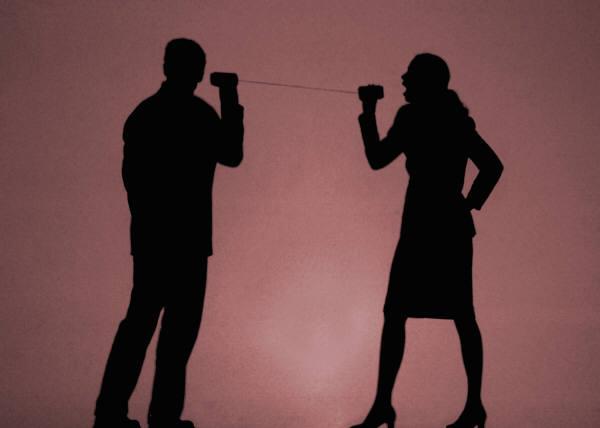
We might be able to trace the origin back to the 10 Commandments, but listicles (not to be confused with any anatomical parts) have exploded in popularity. If you’re a Facebook user, blog reader (which I hope you are, since you’re here), or newsletter receiver, you are well aware of this. We like things enumerated. We like bold letters separating concepts. We like plenty of white space. Continue reading “3 Reasons Why We Like 3 Reasons”
Tag: communication
The 9/6 Perspective
There are few times when a finger is pointed at you that it’s a good thing. Maybe you’re getting picked for a game of kickball or maybe you’ve raised your hand to be chosen for Let’s Make a Deal…but usually a finger aimed at you is a call-out of some sort.
Merriam Webster defines it as “the act of blaming someone for a problem instead of trying to fix or solve it; the act of making explicit and often unfair accusations of blame.”
I don’t know about you, but I’m getting exhausted with our culture of finger-pointing.
The polarization of society is something that really hurts my heart. Be it politics, religion—any number of social issues—people are so busy being adamantly, unwaveringly “right” and often just denigrating and denying the other side’s perspective, that our world is filled with hatred and so-called “righteousness.”
When I taught high school English, one of the exercises I created to try to get students ready for a healthy debate was what I called the 9/6 Perspective. (I had to put the numbers in that order because calling it the 6/9 Perspective would cause too much giggling in a room full of teenagers).
The exercise was very simple. I wrote a figure boldly on a piece of paper, set it on a desk, and had all of the students circle around. Then I’d have two students stand on either side of the desk and tell me what they understood to be written on the paper. Without fail, one would say “a 9” and the other would say “a 6.”
I’d ask them “Are you sure?”
“I know my numbers, Ms. Ancona….”
“Of course I know a 6 when I see one…”
They were certain of the facts in front of them.
Then I would ask the rest of the class, “Well….who’s right?”
This would result in multiple voices speaking up…”They both are!” “It depends!” “If you’re on either side, it looks right!”
And so on…And eventually we would put words around the reality that each “side” saw their own truth—though the answers were completely different.
But it was still their truth.
How you see things matters. Where you’re coming from matters.
And the same goes for the other person.
Now don’t think I see myself as righteous in this respect—my own stances can be passionate for sure (ask me about equal rights, gun laws, or preaching love over law and be ready for an impassioned response)—but I know that when we shut the other side down with scorn and disdain, we simply grow farther apart when the real challenge is learning to live together.
Acknowledging and listening doesn’t mean agreeing or embracing. To listen to a 6 when you are a fervent 9 doesn’t mean they win or you give in, but it hopefully brings the debate to a healthier level where opinions are offered without calling names or spewing hatred.
The ease with which we can “plant our flags” and take stands on Facebook and Twitter has only made the situation worse. It always saddens me so when I see someone share their hatred of “the other side” in a post, and then see the “likes” and comments that follow.
Before the ease of social media to share such things, the circles of disdain or hatred were smaller—or at least more under the radar. Now people share how others “disgust” them right after they post what a great time they had at the beach.
I think we can be better.
The person who sees a 9 when you know a 6 is right is still…a person. So while we can hold tight to our belief in 6, let’s not just be “disgusted” by the 9-seer. Let’s instead work toward what we might be able to do to get that person to walk over to our side of the desk and see the 6. Or maybe we need to do the very same to see their 9. And maybe when we’ve done that neither side will have budged a bit, but at least we might better understand why they believe in what they do.
I don’t mean to simplify life’s complex issues and people.
I know it’s not easy to extend grace when we are passionately entrenched on an issue…
…but I believe it’s what we are called to do.
And I very much believe in what the late, great Maya Angelou said time and again: “We are more alike than we are unalike.”
And if we look at one another that way rather than with contempt, we just might have ourselves a better world to live in.
A Question of Honor
While teaching years ago, I had an interesting exchange with a group of students in my sophomore English class. They were working together on a project, and I overheard one of them say, “Did you see how Mr. So-and-So (another teacher) left the room during our test? He deserves for us to cheat.”
This totally caught my ear, and I inserted myself in their conversation. “What do you mean he deserves for you to cheat?” and the girl replied, “Hey, if he’s going to leave the room and basically invite us to cheat on the test, then I’m going to take him up on it! He deserves it for being so stupid.”
This, of course, did not sit well with me. “So any teacher that doesn’t keep watch over you like a hawk is stupid and basically giving you the right to cheat?” The students chimed in in agreement.
I asked them if they considered themselves to be honorable people, and they all kind of looked at each other like I was speaking Cantonese. I rephrased my question: “How do you know you have honor if you never get the chance to be honorable?” I explained that if they are always treated as untrustworthy and ready to do the wrong thing, they would never learn whether or not if—left solely up to them—they would do the right thing.
We talked some more about it, but ultimately I did not change their minds—at least no one let on that I might have. As far as they were concerned, it was the teacher’s responsibility to make sure they did not cheat—not theirs.
External factors, not internal ones, decided their behavior. It was one of those days as a teacher that put a ding in my armor of hope.
I’m a worrier. It’s in my DNA, unfortunately, though I desperately try to let it go as I know I should. But I just find too many things to worry about, and one of them is the state of honor in our world.
How we behave when “no one is looking” is taking new paths with our growing technological world. And, sadly, as far as I see it, too many of those paths are scary and mean—and sometimes terribly destructive.
As I’ve written before, the way people feel entitled to make hurtful, nasty comments online really hurts my heart. It seems that the ability to write anything you want with little recourse has emboldened an awful lot of people to say an awful lot of awful.
Recently in the news there’s been coverage on an app called Yik Yak that allows people to post completely anonymously, and it has become so brutal that schools are asking the developers to block it in the radius of all schools.
Certainly we have had bullies and jerks since the dawn of time, and many a bathroom wall has been scrawled with malicious comments, but with the ability to reach entire schools and beyond with the touch of a “send,” the ability to be scathingly cruel is reaching new—and powerful—lows.
When did this become the norm? It’s not okay that our world is increasingly more tolerant of snipe and snark.
Even sites like Yelp have created a culture of the haughty know-it-alls who are ready to rip any business they feel “deserves” it. Don’t get me wrong—I believe in the concept of community reviews—but there is a way to go about it that shares your opinion without trying to take down whatever business is in your sites.
Would these “reviewers” say this to the business owner in person?
Personally, I think that’s a pretty good gauge about whether or not most comments should be made. If you’re not willing to say it right to the person’s face, then don’t blast it for everyone else in the world to take in. People’s livelihoods are at stake, and while it might feed someone’s ego to make snipey comments about the meal they had at a local restaurant or customer service they received at the dry cleaners, I ask that we keep honor in mind as we make those comments.
I’m not saying we need to only leave positive reviews or comments. I have let several companies know when I have been unhappy with their service or products. (For instance, there was the time I told the hotel rep directly that our stay was really poor and they told me to take it up with corporate, and when I did, corporate’s remedy was to give me 30% off of my next stay at the very hotel I was complaining about. Sigh.)
But we can be more honorable, can’t we? Can’t we comment as though there is an actual human being on the receiving end of our words….because…there is.
Anonymity shouldn’t breed cruelty. It shouldn’t be a shield behind which we can throw stones to hurt others. It shouldn’t be a way to “get even” in a world where there’s already plenty of hurt to go around.
I can’t see how being able to get away with things—be it cheating on a test or making mean-spirited comments—makes anyone walk taller or feel better about themselves. But honor sure does.
There’s a wonderful quote from To Kill a Mockingbird about the character Atticus Finch from his neighbor Miss Maudie. She says he’s “the same in his house as he is on the public streets.” A high compliment on the value of being true to yourself and acting honorably.
As far as I’m concerned, I think the world needs a LOT more Atticus Finches.
An Aquatic Connection
I’m pretty crazy about dolphins. It’s a love I’ve had since as far back as I can remember. I was even blessed enough to swim with them years ago.
My experience was all I had hoped for and more–their grace and beauty were overwhelming, and when one of them looked me in the eye, I’m pretty sure she saw right into my soul. She pretty much communicated “I see you,” like in the movie Avatar. Powerful stuff.
It was also a whole lot of fun. Breathtaking fun.
I think that’s part of my love for dolphins–they simply exude joy.
For today’s Frabjous Friday post, I want to share a video of a dolphin seeking a diver’s help. It’s a different kind of joy to feel here–the amazing connection between two mammals from two very different worlds.
The diver was there to film stingrays, and the dolphin just swam up as if to say, “Um, excuse me…could you please free me of this hook and line?”
And that’s exactly what happened. Take a look.
[Email subscribers: please remember you will have to click through to my blog to view the clip.]
This dolphin knew enough to ask for help in his struggle.
We should, too.
So if you’ve got a hook and line that’s hurting you, maybe it’s time to find the right diver to set you free.
Sometimes all you need to do is ask.
______________________________
PS. If you have a few more minutes and would like to enjoy a “dolphin stampede” that is captured via drone video, watch below.
The Quiet Space
There is a tiny little space that can make all the difference in our relationships, according to The Book of Me. (That’s not really a book (yet) but it is more fun to say than “in my opinion.”) The results of creating this minute space can ripple far beyond the immediate.
What exactly is this space? I call it the Quiet Space—the time between listening to what someone has said to you and replying to it. It is that time where we have heard what the other person has said, processed it (at least in part), and thought about what our reply should be. Because our brains are so amazing, this only takes a moment, but it can be a truly powerful one.
I’ve lived enough years and paid enough attention to life to know that a common thing pretty much everyone wants is to feel truly heard—to be understood. I know I do. Maybe that’s why I love writing so…it is filled with quiet spaces of thought and a desire to be understood.
I also have enough self-awareness to know that I am guilty of thinking of the next thing I want to say rather than giving my full attention to the one speaking. This is particularly evident in an argument—when I am busy getting my next line of defense in order, rather than digesting what words are coming my way.
Very human…and also very frustrating.
If two people are not allowing for quiet space, they are merely speaking at each other, not to each other and will most likely find this as satisfying as slapping their respective heads against the wall. I’m pretty sure we’ve all been there and have the flat foreheads to prove it.
With a little quiet space and a feeling of being understood, arguments can slow down and maybe even come to a resolution (a what?) rather than adding logs to the fire.
But the quiet space doesn’t just help end combat—it also acts as a net for those you love to know they can fall into.
Let’s peek in on this imaginary scenario: maybe you’re sipping a coffee at a local establishment doodling on your phone when the table next to you is having an intimate conversation. (I have to say, I think people at these places believe that each table is a soundproof room or something, because LOTS is shared…and loudly…so even though I want to play QI for the 3648 time on Words with Friends, I can’t help but overhear…)
The first friend shares, “I don’t know what to do. He said he’s done trying and wants out. I can’t believe this is happening to me.”
“Oh, it’ll be fine,” her friend responds. “He’s probably just trying to make a point. I can’t tell you how many times George has said something like that to me. I remember one time when…” and off she goes to tell her hurting friend about something from her own life, rather than truly digesting what her friend has said and responding to it.
Now, the “listener” isn’t a bad person…she’s just not letting her friend’s words get all the way into her heart. For whatever reason, we all too often respond with a “me, too” or a quick bit of advice, rather than letting the words sink in and register. With a little honoring of the quiet space, the chance to let some real compassion grow increases a bunch.
If the listener hears and processes why her friend is sharing, her response might take a totally different turn into something like, “I’m so sorry you’re going through this. No wonder you’re confused—this is tough stuff.”
And instead of just swapping marital war stories, the friend now feels as though she has a safe place to share her hurt.
I think this can move mountains when it comes to connecting with one another.
Think of the impact we can have in our daily lives and the lives of those we care about with a little more quiet space and a little less need to fill the void with our own next (very important!) words.
Some quiet space goes a long way in letting real communication happen. It gives us the chance to understand the other person and measure our own response. What a wonderful opportunity!
And there is no risk involved—only the promise of gain. What an awesome investment of time.
Don’t neglect the power of the quiet space. It is in fact the absence of an immediate response that can speak the loudest of all. You gotta love the irony.
More Than You Know
This past week, a janitor from my work retired. Many years ago, in a “random act of kindness” mindset, I sent him a card telling him how much I appreciated the work he did and the way in which he did it. The next time he saw me, this soft spoken man said to me, “Thank you so much for the card—your words meant more than you know.” It was just a small gesture, but it mattered. From that day forward, there was an extra measure of warmth in our greetings to one another.
Saying farewell to him got me thinking about the ways in which things touch our hearts and how much it can mean to share those sentiments—and how often we miss opportunities to do just that.
When I was in my senior year of high school, a friend of mine signed the back of her class photo (do they still do that anymore?) in a way that took me by surprise. Though the exact wording is hazy in my memory, it was along the lines of “your friendship means more than you know.” It made me feel like I mattered to her and it opened up a conversation that we never would have had without her sharing her feelings in tiny blue handwriting.
We are still friends today.
We are meant to matter to one another. Except for the occasional recluse, we are social beings where mattering to someone else matters to us. So why is it so hard for us to let people know “more than they know”?
Sometimes I think it’s because we’re too busy—caught up in the minutiae of life. And that’s really a shame, when you think about it. Every day is a race…but to where? And for what?
Sometimes I think it’s because it’s just plain hard to find the right words. As a writer, I know that I am a much better communicator with my fingers than my lips. It gives me a chance to think through my thoughts…usually a plus in Communication Land.
Sometimes I think it’s because it’s just too scary. If we share with someone that we care about them, and it’s met with anything less than reciprocation, it’s a bit of a bummer. When things are too often a one-way street, realizing you are traveling alone hurts the heart.
Whatever the case, too often we miss opportunities to connect with someone and let them know they matter. And whatever the excuse, those missed opportunities are a loss. For both giver and receiver.
My heart is heavy these days. A very dear friend of mine has suffered yet another devastating blow in her battle with cancer. There is nothing that I can say to her that will be of any real help. But I know with certainty that she knows she matters to me and that I’m praying for her. I know that she feels the love of many. And while this doesn’t lessen her pain or change her diagnosis, it does matter. She matters.
Please know that I am no one to teach or preach on vulnerability—my husband jokes that I am a CIA agent because I can be so guarded on things—but often I write because it is the very thing I need to hear. So…go tell someone they matter to you. It may be “more than they know”—and exactly what they need to hear.